WHAT ACTUALLY CAUSES IT
What Actually Causes Erectile Dysfunction?
Written by Dr. Mahmood Siddique, DO, FACP, FCCP, FAASM · Medically reviewed · Updated July 2026
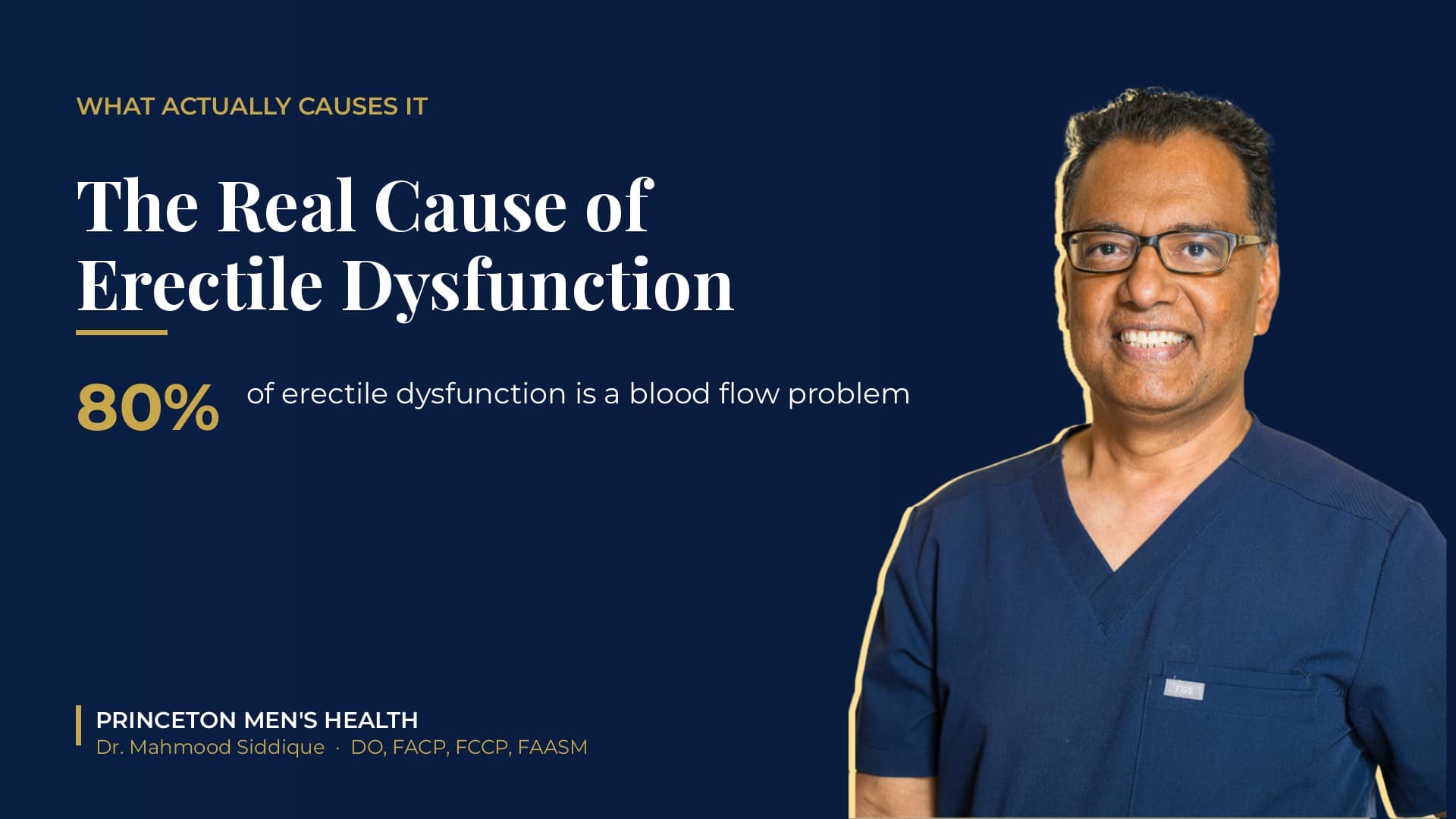
Most men assume erectile dysfunction is either “in your head” or “just age.” Usually it’s neither. In roughly 80% of cases, ED is a physical problem with blood flow — and identifying the actual cause is what makes it treatable. Here is what’s really behind it, explained by Dr. Siddique.
It Starts With Blood Flow
An erection is a circulation event. On arousal, blood rushes into the two chambers of the penis and pressure builds. Anything that reduces that blood flow — or lets it escape — makes an erection harder to achieve or keep.
That’s why the single most common cause of ED, by a wide margin, is vascular: narrowed or damaged arteries delivering less blood. Around 80% of erectile dysfunction is vasculogenic. It is far more often a plumbing problem than a psychological one.
The Most Common Causes
Vascular (blood flow) — plaque buildup, high blood pressure, and aging vessels reduce inflow. This is the leading cause. It’s also why ED can be an early warning sign of heart disease.
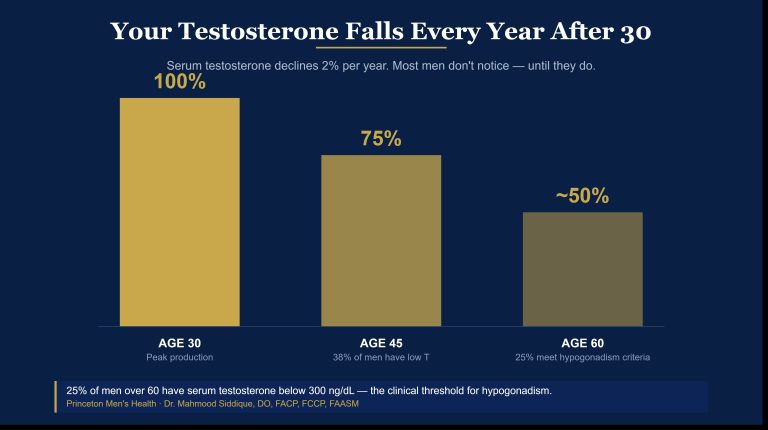
Low testosterone — testosterone drives libido and supports the tissue and blood flow an erection depends on. Levels fall roughly 1–2% a year after 30, and 38% of men over 45 have low testosterone.
Metabolic — diabetes, obesity, and metabolic syndrome damage blood vessels and nerves, and are strongly linked to ED.
Neurological — the signal has to travel from brain to blood vessels. Nerve damage from diabetes, surgery, or injury can interrupt it.
Medications — some blood pressure drugs (like certain beta blockers) and antidepressants (SSRIs) can cause or worsen ED.
Lifestyle — smoking, excessive alcohol, and a sedentary lifestyle all damage the vascular system over time.
Sleep — untreated sleep apnea suppresses testosterone and strains the cardiovascular system. It is one of the most overlooked contributors.
Psychological — anxiety, depression, stress, and performance anxiety are real causes, but they’re less common than most men assume, and often coexist with a physical cause.
Why “Just Aging” Is the Wrong Answer
ED does become more common with age — but age itself isn’t the mechanism. What actually changes is everything above: arteries narrow, testosterone drops, plaque accumulates, metabolic problems creep in. Those are identifiable and, in most cases, treatable. “It’s just age” ends the conversation. Finding the real cause starts it.
Why the Cause Determines the Treatment
This is why ordering pills online often disappoints. Oral medication works for some causes and not others. If the real problem is a significant venous leak, low testosterone, or untreated sleep apnea, a stronger pill won’t fix it — and may hide a problem worth catching.
Dr. Siddique evaluates ED by looking for the cause first: bloodwork, vascular and metabolic health, hormones, and sleep. The treatment then follows the diagnosis, rather than the other way around.
Frequently Asked Questions
Reduced blood flow. About 80% of ED is vascular — caused by narrowed or damaged arteries delivering less blood to the penis. This is why erectile dysfunction is often linked to conditions like high blood pressure, high cholesterol, and heart disease.
Usually physical. While anxiety, stress, and depression can cause ED, the majority of cases have a physical cause — most often reduced blood flow. Psychological factors are real but less common than most men assume, and frequently occur alongside a physical cause.
Yes. Testosterone supports libido and the blood flow and tissue an erection depends on. Low testosterone can contribute to ED, and treating the ED without addressing low testosterone often produces disappointing results. Levels fall roughly 1–2% per year after age 30.
ED becomes more common with age, but age itself isn’t the cause. What changes with age — narrowed arteries, lower testosterone, plaque buildup, metabolic issues — is identifiable and usually treatable. “It’s just age” isn’t a diagnosis; it’s a reason to look closer.
If ED is a pattern rather than an occasional off night, it’s worth evaluating — both to treat it and because it can be an early sign of a vascular or metabolic problem that hasn’t been diagnosed. A physician evaluation identifies the cause instead of just prescribing a pill.
Related Reading
- Why Viagra stopped working for you — and what actually comes next →
- Why you can get hard but can’t stay hard (venous leak) →
- Is erectile dysfunction a warning sign for heart disease? →
- Erectile Dysfunction Treatment in Princeton, NJ →
Find Out What’s Actually Causing It
The right treatment starts with the right diagnosis. Dr. Siddique will identify what’s actually behind your ED and tell you honestly what will help.

ABOUT THE AUTHOR
Dr. Mahmood Siddique, DO, FACP, FCCP, FAASM
Dr. Siddique is a quadruple board-certified physician with nearly 30 years in practice and a Clinical Associate Professor of Medicine at Rutgers Robert Wood Johnson Medical School. He leads Princeton Men’s Health in Lawrence Township, NJ. Read more about Dr. Siddique.