
Board-Certified Sleep Medicine · Physician-Led · Lawrence Township, NJ
Sleep Apnea and Low Testosterone in New Jersey
Untreated sleep apnea is one of the most common — and most overlooked — causes of low testosterone in men. Dr. Siddique holds board certifications in both sleep medicine and internal medicine. Almost no men’s health clinic does.
The Connection Most Men’s Clinics Miss
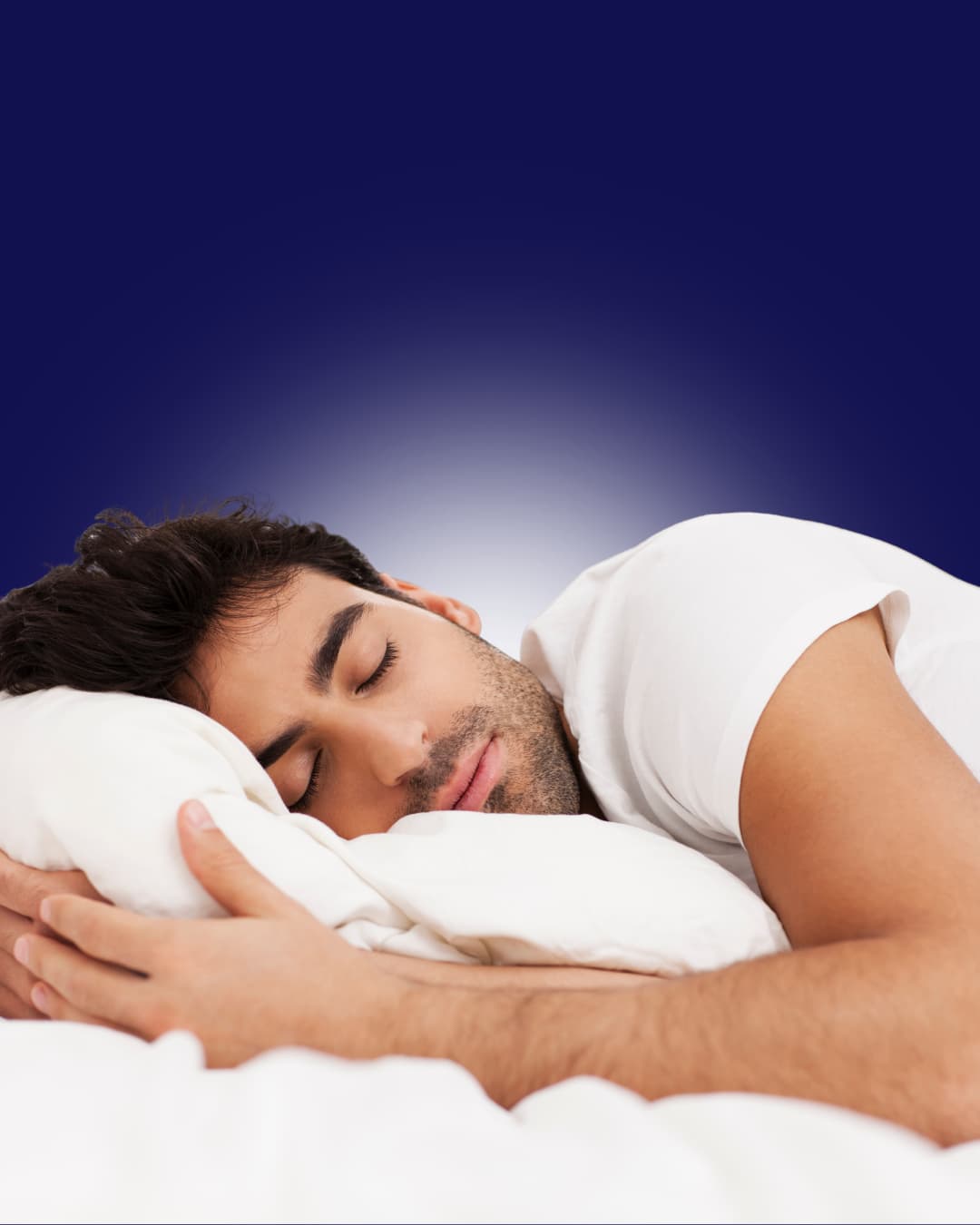
The majority of testosterone production in men occurs during sleep — specifically during the deep sleep stages known as slow-wave sleep. This is not a minor contribution. It is where most of your daily testosterone supply originates.
Obstructive sleep apnea disrupts those deep sleep stages repeatedly throughout the night. Each apnea event — each moment your airway collapses and breathing stops — pulls you out of the restorative sleep architecture your body depends on. Over months and years, this chronically suppresses testosterone production at the source.
I have had patients whose testosterone levels improved significantly after their sleep apnea was properly treated — without any hormone therapy at all. I have also had patients who needed both sleep treatment and testosterone replacement to feel well again. The only way to know which situation you are in is a proper evaluation of both.
Why This Combination Goes Undiagnosed
Sleep apnea and low testosterone share almost identical symptom profiles. Fatigue. Low libido. Difficulty concentrating. Irritability. Weight gain. Disrupted sleep. A man presenting with these complaints could have one condition, the other, or both — and the symptoms alone cannot tell you which.
Most men’s health clinics test testosterone. Most sleep clinics treat sleep apnea. Very few providers are equipped to evaluate and manage both in the same clinical encounter — which means men with both conditions frequently get half an answer.
I am board-certified in internal medicine, pulmonary medicine, critical care, and sleep medicine. When a patient comes to me with fatigue, low testosterone, and a partner who says he snores — I can evaluate the full picture in one place. That is not something most men’s health practices can offer.
Signs That Both Conditions May Be Present
The following symptoms, particularly when they appear together, suggest that sleep apnea and low testosterone may both be contributing:
- Fatigue that sleep does not fix — waking exhausted despite a full night in bed is a hallmark of both conditions
- Snoring or witnessed apnea — a partner reporting stopped breathing at night is a significant clinical flag
- Low libido — one of the earliest symptoms of both low testosterone and sleep-disordered breathing
- Morning headaches — a common sign of overnight oxygen desaturation from apnea events
- Difficulty maintaining an erection — both vascular and hormonal pathways are affected by chronic sleep disruption
- Weight gain around the abdomen — visceral fat suppresses testosterone and worsens sleep apnea simultaneously
- Depression or flat mood — hormonal and sleep-related mood disruption are clinically indistinguishable without testing
- Poor concentration and memory — cognitive effects of both conditions overlap significantly
None of these symptoms alone confirms either diagnosis. Together, they are a strong signal that both deserve investigation.
What a Dual Evaluation Looks Like
When a patient presents with symptoms suggesting both sleep apnea and low testosterone, I approach the evaluation in two parallel tracks.
For testosterone, I order a full morning hormonal panel — total testosterone, free testosterone, SHBG, LH, FSH, estradiol, hematocrit, PSA, and a metabolic panel. A single number drawn at the wrong time of day is not a diagnosis.
For sleep, I take a detailed sleep history and, where indicated, order a sleep study — either an in-lab polysomnogram or a validated home sleep test depending on the clinical picture. The results of both evaluations inform the treatment plan together, not in isolation.
Treatment — When to Treat Sleep, Testosterone, or Both
The treatment sequence depends on what the evaluation finds. For men whose low testosterone appears to be primarily driven by untreated sleep apnea, I typically address the sleep apnea first — with CPAP therapy or an appropriate alternative — and retest testosterone after a period of adequate treatment. Some men see meaningful improvement without any hormone therapy.
For men whose testosterone remains low despite effective sleep apnea treatment, or whose levels are significantly below the clinical threshold from the outset, testosterone replacement therapy becomes part of the conversation. The delivery method — gel, injections, or pellets — is determined based on labs, lifestyle, and the individual patient.
For men who need both: the two treatments are compatible and I manage them concurrently, with monitoring of testosterone levels, estradiol, hematocrit, and sleep response at regular intervals.
Individual results vary. Not every patient with sleep apnea will see testosterone normalisation after treatment, and not every patient with low testosterone has sleep apnea as the primary driver. The evaluation answers those questions — the treatment follows the findings.
Dr. Siddique — Uniquely Qualified for Both
Board certification in sleep medicine is rare in general medicine. It is almost unheard of in men’s health clinics, which are typically run by providers whose training is in urgent care, aesthetics, or general practice.
I am board-certified in internal medicine, pulmonary medicine, critical care, and sleep medicine — and I hold a Clinical Associate Professorship at Rutgers Robert Wood Johnson Medical School, where I train the next generation of physicians. I have been in active clinical practice for nearly 30 years.
When you come to Princeton Men’s Health with a sleep and hormone concern, you are not being handed off to a protocol. You are being evaluated by a physician who has spent nearly 30 years at the intersection of these systems.
Is This You?
If you are tired in a way that sleep does not fix, if your libido has declined, if your partner says you stop breathing at night, if your testosterone has been tested and come back “normal” but you still do not feel like yourself — this is worth a proper evaluation.
Princeton Men’s Health is located at 31 East Darrah Lane in Lawrence Township, New Jersey — minutes from Princeton, Hamilton, West Windsor, and the surrounding Mercer County area.
Frequently Asked Questions
Yes — and it is one of the most commonly missed connections in men’s health. The majority of testosterone production occurs during deep sleep. Obstructive sleep apnea fragments those sleep stages repeatedly throughout the night, chronically suppressing testosterone production at its source. Some men see meaningful improvement in testosterone levels after their sleep apnea is properly treated. Individual results vary.
The two conditions share almost identical symptom profiles: fatigue, low libido, difficulty concentrating, irritability, weight gain, disrupted sleep, and mood changes. This overlap is one reason the combination frequently goes undiagnosed — the symptoms alone cannot tell you which condition is driving them, or whether both are present simultaneously.
That depends on the evaluation findings. For men whose low testosterone appears primarily driven by untreated sleep apnea, I typically address the sleep apnea first and retest testosterone after a period of effective treatment. For men whose testosterone is significantly below clinical thresholds regardless of sleep status, both may be addressed concurrently. The sequence is determined by the clinical picture — not a standing protocol.
I evaluate sleep apnea and order sleep studies — in-lab polysomnograms or validated home sleep tests depending on the clinical picture. Treatment recommendations including CPAP therapy are part of the evaluation. My board certification in sleep medicine means this is not a referral-only service — I manage sleep and hormone concerns together in the same clinical relationship.
Sleep apnea affects erectile function through multiple pathways. Chronic oxygen desaturation from apnea events damages vascular endothelium over time — the same vascular pathway that underlies vasculogenic erectile dysfunction. Sleep apnea also suppresses testosterone, which independently affects libido and erectile quality. Men with untreated sleep apnea frequently experience both hormonal and vascular contributors to ED simultaneously.
Call Princeton Men’s Health at (844) 513-2150 or use the booking form on our contact page to schedule a consultation with Dr. Siddique. Every evaluation begins with a thorough review of your sleep history, symptoms, and hormonal status before any treatment is recommended.
Two Problems. One Physician. One Clinic.
Sleep apnea and low testosterone are among the most undertreated conditions in men’s health — partly because most providers only look for one at a time. Princeton Men’s Health evaluates both.
Princeton Men’s Health · 31 East Darrah Lane, Lawrence Township, NJ · (844) 513-2150