
Peyronie’s Disease — When to See a Specialist and Why It Matters
Most men wait eight months to a year before mentioning a new curve or lump to any doctor. That delay may be the single biggest factor in how well this condition responds to treatment.
Peyronie’s disease is not something men bring up casually, and it’s not something most men bring up quickly. It usually starts subtly — a new curve during erection, a firm band or lump felt under the skin, sometimes pain during erection — and it’s common to wait, hoping it resolves on its own or gets attributed to something else entirely. That delay matters more with this condition than with almost any other issue in men’s sexual health.
What Peyronie’s disease actually is
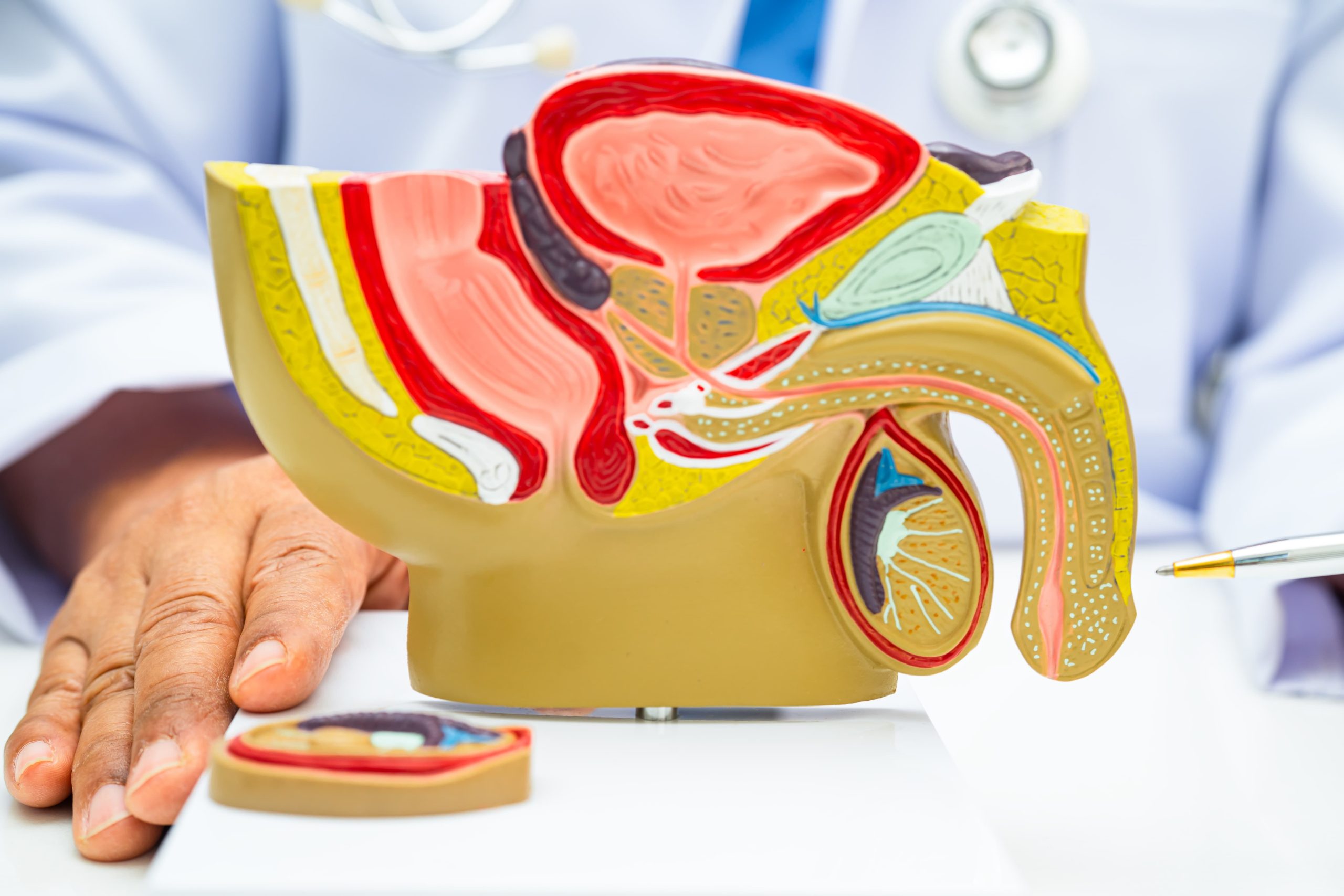
Peyronie’s disease develops when scar tissue, called plaque, forms within the fibrous sheath (tunica albuginea) that surrounds the erectile tissue of the penis. That plaque restricts expansion on one side during erection, producing a curve, indentation, or narrowing. It’s frequently linked to an injury or repeated microtrauma to the area, though many men don’t recall a specific incident.
Causes and risk factors
While injury or microtrauma to the penis during intercourse is a commonly cited trigger, Peyronie’s disease also appears more frequently in men with connective tissue conditions, in men over 40, and in men with certain vascular risk factors that overlap with those for erectile dysfunction. In many cases, no single triggering event is identified.
The two phases — and why timing changes everything
Peyronie’s disease progresses through two distinct phases. The acute phase, typically lasting six to eighteen months, is when the plaque is actively forming, curvature may still be changing, and pain (if present) is most common. The chronic phase follows, once the plaque has stabilized and curvature has typically stopped progressing.
This distinction matters enormously for treatment. The acute phase is the window where intervention has the greatest potential to influence the course of the condition and limit progression. Once the chronic phase sets in and the plaque has matured, the range of effective options narrows, and surgical correction becomes more likely to be the only option for significant curvature. This is exactly why waiting to mention a new curve is costly — every month spent waiting is a month inside the window where non-surgical options are most viable.
What a specialist evaluation involves
A specialist evaluation includes a detailed history (when the curve or lump was first noticed, whether it’s still changing, pain level, effect on intercourse), a physical exam to characterize the plaque’s location and size, and often a measurement of curvature. Additional workup may include an assessment for related conditions, since Peyronie’s disease and erectile dysfunction frequently coexist and can share contributing vascular factors.
What a GP visit typically offers, and where it falls short
A general practitioner can recognize Peyronie’s disease and will often confirm the diagnosis, but a routine primary care visit rarely has the time or specialized focus to stage the condition (acute vs. chronic), discuss the range of treatment options in detail, or coordinate a plan matched to where a patient is in the disease’s progression. Referral to a specialist, or scheduling directly with one, shortens the time to a fully informed plan — time that matters given how phase-dependent treatment options are.
Treatment options depend on the phase
During the acute phase, options may include oral or injectable medications aimed at limiting plaque progression, and in select cases, non-surgical approaches aimed at improving symptoms. During the chronic phase, once curvature has stabilized, surgical correction is typically the most reliable option for men with significant curvature affecting function. Every case is different, and treatment recommendations depend on your specific presentation, curvature severity, and phase. Individual results vary, and there are no guaranteed outcomes with any treatment approach.
The impact beyond the physical
Beyond the physical curvature, Peyronie’s disease often carries a real emotional and relational weight — anxiety about intimacy, self-consciousness, and strain in a relationship are common and valid concerns, not incidental ones. Addressing the physical condition is often only part of a complete plan; being able to talk openly with a physician about how the condition is affecting you day to day is part of a thorough evaluation.
Why timing is the message here
If there’s one point worth taking away, it’s this: a new curve, lump, or pain during erection is worth a same-week conversation with a physician, not a wait-and-see approach carried out for months. The acute phase is finite, and the options available during it are broader than what remains once the condition has stabilized.
If you’ve noticed a new curve, lump, or pain, contact Princeton Men’s Health for an evaluation. I see patients from Lawrence Township, Hamilton, and West Windsor, and earlier evaluation generally means more options are still on the table.
Frequently Asked Questions
What is Peyronie’s disease?
Peyronie’s disease is a condition in which scar tissue (plaque) forms within the fibrous sheath surrounding the erectile tissue of the penis, causing curvature, indentation, or narrowing during erection, and sometimes pain.
How long does the acute phase of Peyronie’s disease last?
The acute phase, during which the plaque is actively forming and curvature may still be changing, typically lasts six to eighteen months before the condition stabilizes into the chronic phase.
When should I see a specialist for Peyronie’s disease?
As soon as you notice a new curve, lump, or pain during erection. Evaluation during the acute phase offers the broadest range of treatment options, and delaying care reduces the window for non-surgical intervention.
Can Peyronie’s disease be treated without surgery?
In some cases, particularly during the acute phase, oral or injectable medications and other non-surgical approaches may help limit progression or improve symptoms. Once the condition reaches the chronic phase with significant curvature, surgical correction is often the most reliable option. Individual results vary.
Does Peyronie’s disease affect erectile function?
It can. Peyronie’s disease and erectile dysfunction frequently coexist and may share underlying vascular contributors, which is why a complete evaluation often assesses both conditions together.
How is Peyronie’s disease diagnosed?
Diagnosis involves a detailed history, a physical exam to characterize the plaque, and a measurement of curvature. A specialist evaluation also determines which phase the condition is in, which directly informs treatment options.